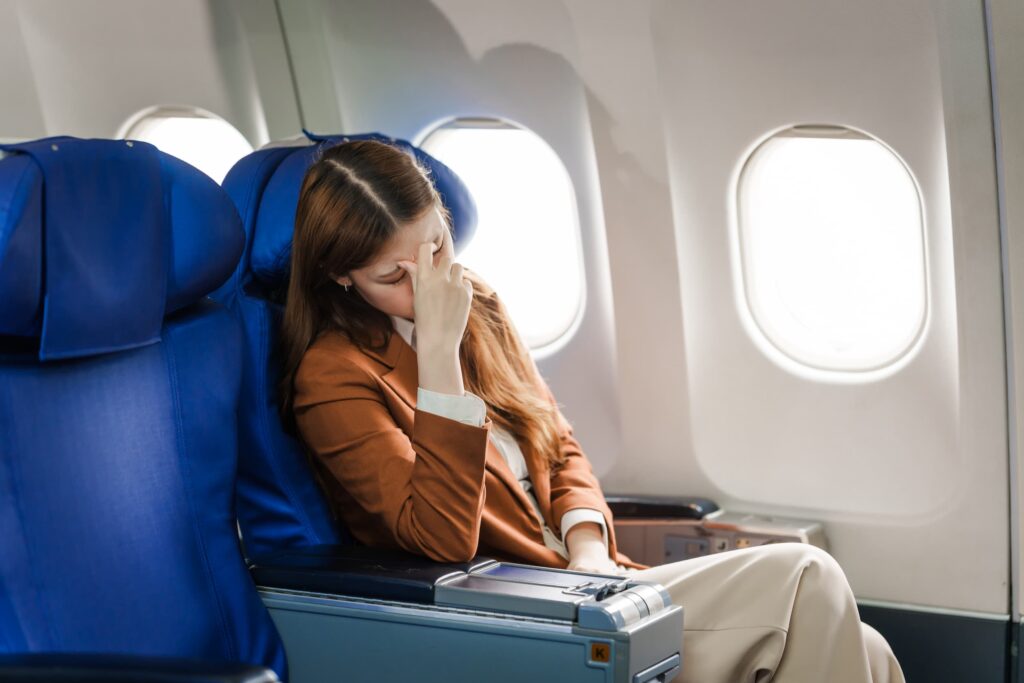
If you’ve ever stepped off a plane feeling like your ears are clogged after flying, you’re not alone. A blocked ear after flying is one of the most common ear complaints we hear at Earworx, affecting travellers of all ages. That familiar sensation of muffled sound, pressure, or fullness can range from mildly uncomfortable to genuinely painful. The good news is that understanding what’s happening inside your ear can help you manage it more effectively, and know when it’s time to seek professional support.
What Causes Blocked Ears When Flying?
The Role of Air Pressure and the Eustachian Tube
The primary culprit behind blocked ears when flying is a phenomenon called barotrauma, or more specifically, ear barotrauma. Your middle ear is connected to the back of your throat by a small channel called the Eustachian tube. Under normal conditions, this tube opens and closes naturally to equalise the air pressure on both sides of your eardrum as the pressure in the outside world changes. When cabin pressure changes rapidly during take-off and descent, and where the eustachian tube is blocked or not ‘patent’ (e.g. when you have a cold), this prevents the eustachian tube from opening which causes a pressure imbalance that creates that tell-tale sensation of fullness or blockage.
Why Earwax Can Make It Worse
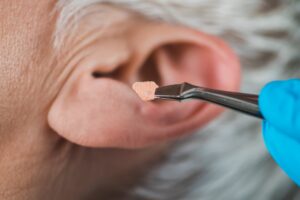
For some people, existing earwax build-up can amplify the problem significantly. When earwax partially narrows the ear canal, even minor pressure changes can feel more pronounced as the ear is already feeling ‘blocked’. If your ears are clogged after flying and the sensation persists well beyond landing, a build-up of cerumen (earwax) may be contributing to your discomfort. This is something Earworx registered nurses see regularly in the clinic.
Other Contributing Factors
Congestion from a cold, hay fever, or sinus issues can make the eustachian tube less effective at equalising pressure during a plane flight. Flying while unwell is one of the most common reasons people experience blocked ears after a plane flight that simply won’t resolve on its own. Children are also particularly susceptible due to the anatomy of their eustachian tubes.
How to Manage Blocked Ears After Flying
In-Flight Techniques
There are several strategies you can try during the flight to help manage pressure changes as they occur. The ‘valsalva manoeuvre’, which involves pinching your nostrils closed, closing your mouth, and gently exhaling against the closed airway, encourages the eustachian tube to open; perform this as often as needed during the plane’s descent. Swallowing, yawning, and chewing gum are also effective ways to activate the muscles that control the tube. Staying well-hydrated throughout your flight supports healthy mucous membrane function and can make equalisation easier.
After You Land
In most cases, blocked ears after a plane flight will resolve within a few hours. Staying hydrated, using a saline nasal spray, and allowing time for your body to adjust can all help. Over-the-counter decongestant nasal sprays may also provide relief if congestion is a contributing factor, though these should be used only as directed and are not suitable for everyone.
What to Avoid
It’s worth resisting the urge to push anything into the ear canal in an attempt to relieve the pressure. Cotton buds and other objects can push earwax deeper, irritate the ear canal lining, and create further problems. Similarly, ear candles have no clinical evidence supporting their use and carry real risks of harm.
When to Seek Professional Ear Care
Symptoms That Warrant Attention
If your ears are clogged after flying and the blockage persists beyond 24 to 48 hours, or if you experience pain, discharge, dizziness, or a noticeable change in your ability to hear, it’s important to have your ears assessed by a professional. Prolonged eustachian tube dysfunction or unresolved earwax build-up can sometimes contribute to ear infections or other complications if left unaddressed.
How Earworx Can Help
At Earworx, our registered nurses are trained to assess and address ear discomfort and remove impacted earwax using professional microsuction technology. If earwax build-up is contributing to your blocked ears after flying, micro-suction offers a precise and controlled approach to removal using medical-grade suction under direct visualisation. It requires no water or flushing, making it well-suited to sensitive ears.
If you’re a frequent flyer or find that blocked ears after a plane flight are becoming a recurring issue, it may be worth considering a professional ear health check before your next trip. Addressing any existing wax build-up ahead of travel can make a meaningful difference to your comfort at altitude.
Find your nearest clinic and book an appointment.